
The Illusion of the 18-Year-Old “Adult”
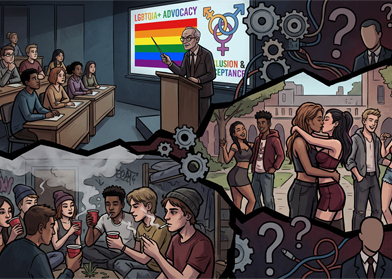
Society draws an arbitrary line in the sand: the moment a person turns 18, they are handed an “adult” label and expected to make choices that will impact the rest of their lives. But modern neuroscience reveals a hidden truth that colleges quietly exploit: the human brain is not fully developed at age 18.
The prefrontal cortex—the region of the brain responsible for long-term planning, risk assessment, emotional regulation, and resistance to peer pressure—does not finish developing until a person is roughly 25 years old.
Between the ages of 18 and 22, a young person is in a fragile state of biological transition. They have the physical body of an adult, but their brain is still highly vulnerable to external conditioning. When you take thousands of these developing brains, strip them away from the stabilizing anchor of their families, and pack them tightly into a high-pressure campus environment, you create a perfect psychological pressure cooker. When you take a room full of developing brains, separate them from their families, and place them into an environment where their social survival depends on conforming to the professor’s worldview, it isn’t education. It is a high-pressure environment perfectly designed for influence and compliance.
The Dynamics of Campus Contagion: Ringleaders and Ranks
True education requires independence, but the modern college social structure demands radical conformity. Because the 18-to-22-year-old mind is biologically primed to seek tribal acceptance, campus social groups quickly devolve into a destructive hierarchy driven by two distinct groups:
-
The Deviant Ringleaders (The Ego-Strokers): In almost every campus setting, the loudest, most radical, or most reckless students set the cultural tone. They make destructive, rebellious, or unhinged behavior look thrilling and sophisticated. But their motivation isn’t freedom; it is a desperate thirst for control and validation. Somewhere deep in their minds, these ringleaders harbor an intense need for approval. If they can successfully manipulate their peers into acting, dressing, talking, and thinking exactly like they do, it strokes their ego and validates their own choices. They conquer their own insecurities by turning everyone around them into mirrors of themselves.
-
The “Good” Students (The Conformity Trap): On the other side are the traditionally disciplined, well-behaved students. Logically, they know better, but they possess a deep, often subconscious fear of social rejection. In a closed environment like a college campus, being isolated or labeled an “outsider” feels like a survival threat to a developing brain. To avoid the pain of being cast out, these students suppress their own common sense, values, and upbringing. They quietly fall into line, adopting the vocabulary, habits, and political stances of the loudest voices in the room simply to pass the social acceptance test.
A System Designed for Influence
Colleges claim to foster “free thought,” but the architectural reality of the university system does the exact opposite. By exploiting a temporary window of neurological vulnerability, the campus environment successfully overrides individual personality. It pressures young people into abandoning their family structures and self-reliance, replacing them with a uniform, institutionalized hive-mind.
Psychological References to Back This Up (For the bottom of the page)
-
Asch Conformity Experiments (Solomon Asch, 1951): A landmark psychological study proving that human beings will knowingly voice completely incorrect answers or adopt absurd behaviors just to fit in with a group and avoid social discomfort.
-
The Social Amplification of Risk (Kasperson, et al.): Psychological research demonstrating how peer groups actively normalize and accelerate high-risk or deviant behavior, making actions that would seem insane to an isolated individual look completely attractive and rational within a crowd.